Employer-Owned Devices or Mandatory Monitoring Subscriptions: Which Fits Lone Worker Safety?
Choosing between employer-owned safety devices and mandatory monitoring subscriptions is less about picking a technology and more about matching the way people actually work. For lone worker roles across New Zealand, the decision affects response time, privacy expectations, day-to-day practicality and how clearly everyone understands their responsibilities.
A wearable lone worker alarm can include SOS alerting, GPS location, two way voice, man down alerts and fall detection. Those features are useful only when the worker carries the device, the alert reaches someone who can act, and the workplace policy explains what happens next. That is why ownership and monitoring need to be weighed together, rather than treated as separate purchases.
What employer-owned devices change
When the employer supplies the device, the workplace has more control over whether it is carried, charged, updated and assigned to the right person. This can suit teams where roles are consistent, shifts are structured, or hazards are well known. A device issued at the start of a shift can become part of the normal routine, like a radio, ID badge or piece of personal protective equipment.
Ownership also makes testing easier to organise. If the employer keeps a register of devices, it is simpler to check battery life, confirm that alert buttons work, replace damaged units and make sure the right alert recipient is listed. That matters because a GPS worker alarm with a flat battery or an old contact detail can create a false sense of safety.
The trade-off is that workers may see an employer-owned device as a monitoring tool rather than a safety tool. Clear policy language helps here. The device should be described by what it does in an emergency: sending an SOS, sharing location where available, enabling voice contact and raising man down or fall alerts when a worker may be in trouble. Expectations about carrying it, caring for it and reporting faults should be written plainly.
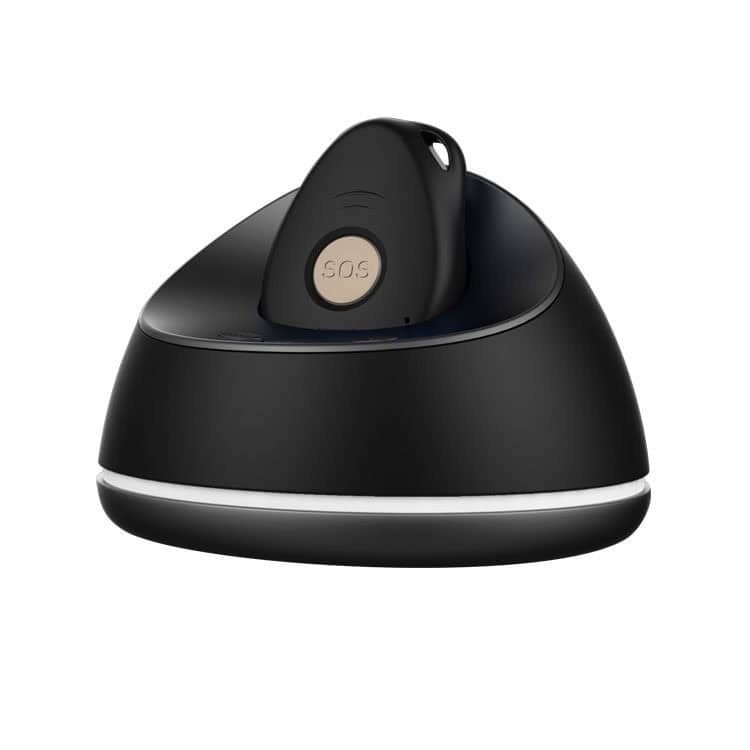
What mandatory monitoring subscriptions change
A monitoring subscription moves the focus from the hardware to the service around it. Instead of relying only on colleagues or supervisors to notice an alert, the workplace defines who receives alerts and what response is expected. For lone workers, this can be valuable because the main risk is often not detecting a problem, but making sure someone acts quickly when an alert arrives.
Mandatory participation can suit high-risk work, remote sites or roles where people regularly work outside normal office hours. It also suits environments where workers may move between teams or locations, because the monitoring arrangement can stay consistent even when devices or assignments change.
The downside is that mandatory monitoring can feel intrusive if the rules are vague. Workers need to know when location is shared, who can see it, what triggers an alert and what happens after an alert is acknowledged. Without that clarity, people may avoid carrying the device or may treat alerts as noise. A good policy distinguishes emergency response from routine performance tracking.
Location accuracy also deserves attention. GPS can work well outdoors, while WiFi positioning or GSM triangulation may assist in some settings where satellite signals are weak. No method is perfect everywhere, so location information should be treated as a useful aid, not a guarantee. A worker who can speak through two way voice may give far better detail than a map point alone.
Comparing the practical fit
Employer-owned devices tend to fit workplaces that want consistent equipment, controlled issuing and a clear maintenance process. Mandatory monitoring subscriptions tend to fit workplaces where alert handling needs to be formal, especially when staff work alone or after hours. Many organisations will find that the two approaches overlap, because a device is only part of the safety system and monitoring gives that device a purpose.
The strongest arrangements usually answer a few practical questions before rollout:
- Who carries the alarm, and when is it required?
- Who is the alert recipient during each shift?
- What happens if an alert is missed, delayed or sent with poor location?
- How are battery life, faults and device testing handled?
- What information is collected, and who can access it?
Those questions matter more than the appearance of the device or the number of features listed. A simple SOS button with a dependable response process may be more useful than a complex unit that people leave in a locker. Conversely, a device with man down and fall detection can add real value where a worker may be unable to press a button after an incident.

Workplace culture has a part to play too. If managers treat alarms as a compliance exercise, workers may comply only on paper. If the system is presented as a way to get help quickly, with clear boundaries around monitoring, it is more likely to become part of daily practice. Training should cover what the alerts mean, how to cancel a false alert and how to report a device that is not working.
Where GPS and location sharing fit
GPS is often the feature people notice first, but it should be understood in context. Location can help an alert recipient send help to the right place, yet it may be delayed or inaccurate indoors, underground, or among tall buildings. In some cases, WiFi positioning or GSM triangulation may provide additional context, though accuracy varies. Voice contact can confirm what is happening and reduce guesswork.
alarms with location sharing can be particularly useful for workers who move across large sites, travel between properties or spend time in areas where they are not easily seen. In those cases, an alert without location may lead to delays while someone works out where the person was last seen. Location data should still be handled with care and explained in the workplace policy, so workers understand why it exists.
alarms with location sharing also raise practical questions about consent, access and retention. A workplace may require a device for safety reasons, but that does not mean every location record needs to be kept or reviewed. The policy should say when location is used, who receives it during an emergency and how routine tracking is avoided. This helps keep the focus on safety rather than surveillance.
Questions to settle before choosing
Start with the work itself. Does the role involve quiet sites, physical labour, machinery, isolation, night shifts or travel? Are there tasks where a fall or sudden illness could stop someone from calling for help? What is the usual response route if a worker does not check in? The answers shape whether SOS alone is enough or whether man down and fall detection are worth including.
Next, look at the human side of the system. A device with excellent technical features still depends on people being willing and able to respond. An alert recipient needs to know how to triage an SOS, how to confirm location, when to call emergency services and when to escalate internally. If nobody is assigned during a shift, the subscription adds little value.
Device testing should be built into the routine in a way that does not disrupt work unnecessarily. Checks can be simple: confirm the unit powers on, the button is accessible, the battery has enough charge and contact details are current. More formal testing may be needed where alerts feed into a monitored service. Faults should be reported quickly and taken out of use if they cannot be relied on.

Battery life is another everyday factor. A device that lasts through a shift may still fail if it is left unused for days and picked up at short notice. Workplaces that issue devices from a store need a charging process. Workers who keep a device between shifts need a simple habit, such as charging it at a set time and checking it before leaving.
Matching the option to the workplace
Employer-owned devices suit workplaces that can manage issuing, charging, maintenance and clear rules of use. They can be a good fit where hazards are stable and supervisors see the same team regularly. Mandatory monitoring subscriptions suit workplaces that need a defined alert pathway, especially where lone work happens off-site, after hours or in places where colleagues cannot easily check in person.
For many New Zealand workplaces, the best choice is not an either-or decision. A wearable alarm supplied by the employer can be paired with a monitoring arrangement that sets out who responds and how. The key is to keep the purpose narrow: fast help when something goes wrong. When policy, training, device care and alert response all point in the same direction, a GPS worker alarm becomes part of a workable safety system rather than a piece of equipment people merely carry.